Why Do You Keep Getting Ingrown Hairs and Razor Bumps, No Matter What You Try?
Updated August 2026
If you have ever gone through a cycle of shaving, waiting for the itch, then dealing with red bumps a day or two later, you already know how frustrating it is to feel like your skin is working against you. It is one of the most common reasons people start searching for laser hair removal near me, not necessarily because they are tired of shaving itself, but because they are tired of dealing with the aftermath.
Ingrown hairs and razor bumps are not just a minor cosmetic annoyance. They are a real dermatological issue with specific causes, and understanding those causes helps explain why laser hair removal tends to solve the problem at its root instead of just managing the symptoms.
What Actually Causes Ingrown Hairs and Razor Bumps?
Why Does Hair Curl Back Into the Skin Instead of Growing Out?
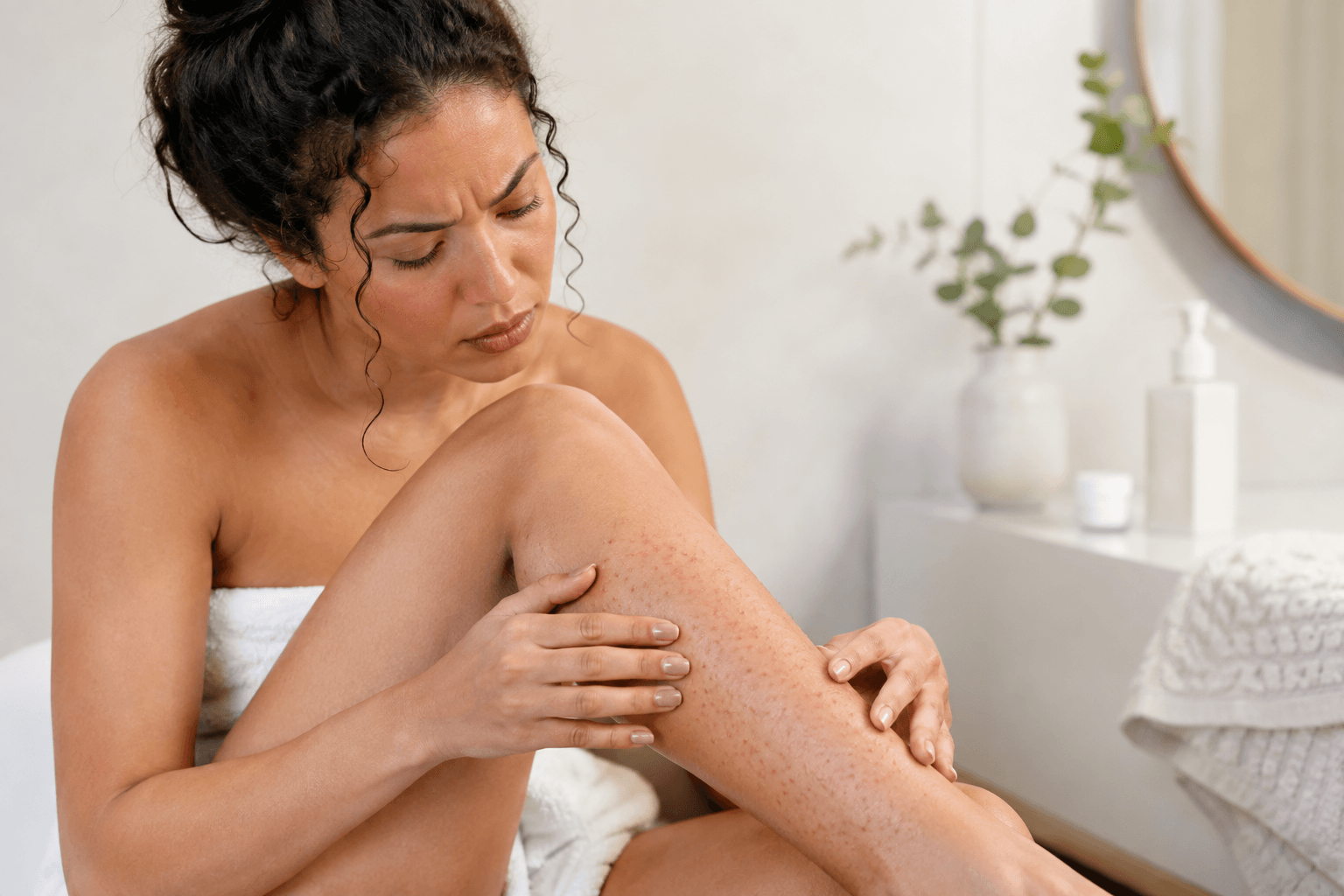
Ingrown hairs happen when a hair curls back or grows sideways into the skin instead of rising straight up out of the follicle. This is especially common in people with naturally curly or coarse hair, since curved hair shafts are more likely to re-enter the skin as they grow. Shaving can make this worse because it cuts the hair at a sharp angle, creating a pointed tip that pierces the surrounding skin more easily than a naturally tapered hair would.
What Is the Difference Between an Ingrown Hair and Folliculitis?
These two conditions often get lumped together, but they are technically different. An ingrown hair is a mechanical issue, the hair itself growing into the skin. Folliculitis is an inflammation or infection of the hair follicle, often caused by bacteria entering through nicks in the skin from shaving or irritation from friction and sweat. Both can look similar, showing up as red, sometimes itchy or tender bumps, but folliculitis can occasionally require different care if it becomes infected. If you are dealing with persistent, painful, or pus filled bumps rather than typical razor bumps, it is worth having a provider take a look before assuming it is a routine ingrown hair.
Can Shaving or Waxing Cause Long Term Skin Discoloration?
Yes, and this is a concern we hear about often, especially from clients with deeper skin tones. Repeated irritation from shaving, waxing, or plucking can trigger a response called post inflammatory hyperpigmentation, where the skin produces excess melanin in response to trauma or inflammation. Over months or years of repeated hair removal, this can leave behind dark spots or patches, particularly in areas like the bikini line, underarms, and upper lip that see frequent hair removal.
Why Do Some Areas Seem More Prone to Ingrown Hairs Than Others?
Areas where skin experiences friction from clothing, where hair grows in multiple directions, or where the skin is thinner and more delicate tend to be more prone to ingrown hairs. This is why the bikini line, underarms, and jawline are common trouble spots. Tight clothing, sweating, and frequent friction in these areas all increase the likelihood that a growing hair gets trapped under the skin's surface.
How Does Laser Hair Removal Actually Solve This Problem?
Why Does Reducing Hair Growth Reduce Ingrown Hairs?
Laser hair removal targets the pigment in hair follicles with concentrated light energy, damaging the follicle's ability to produce new hair over a series of sessions. As hair growth slows and eventually stops in treated areas, there are simply fewer hairs available to become ingrown in the first place. Clients who dealt with chronic ingrown hairs from shaving or waxing often notice a dramatic reduction in breakouts and bumps as their treatment series progresses, since the root cause, the hair itself, is being addressed rather than just removed from the surface.
Is Laser Hair Removal Safe for All Skin Tones?
Modern laser technology has come a long way in being able to safely treat a wide range of skin tones, which matters a great deal since post inflammatory hyperpigmentation and ingrown hairs affect people of all skin tones differently. At Eleven11, we offer treatment options specifically suited for darker skin tones, using settings calibrated to treat hair effectively while minimizing risk to the surrounding skin.
Does Laser Hair Removal Help With Existing Discoloration, or Just Future Ingrown Hairs?
Laser hair removal is primarily focused on reducing hair growth, which prevents future ingrown hairs and the irritation that leads to new discoloration. It is not a direct treatment for existing dark spots, but many clients find that once shaving related irritation stops, the skin has a chance to heal and existing discoloration fades gradually on its own. For more targeted concerns around hyperpigmentation, treatments like a chemical peel can be used alongside a laser hair removal series.
How Many Sessions Does It Take to See a Real Reduction in Ingrown Hairs?
Hair grows in cycles, and laser treatment is most effective when it catches hair in its active growth phase. Because not all hairs are in that phase at the same time, a series of sessions, typically six to eight spaced several weeks apart, is needed to treat all the hair follicles in an area effectively. Many clients notice a meaningful reduction in ingrown hairs after just two or three sessions, with continued improvement as the series progresses.
Who Should Consider Laser Hair Removal for This Specific Reason?
If you have spent years cycling through razors, waxing appointments, or depilatory creams and dealing with the same bumps, irritation, or dark spots afterward, you are exactly the kind of candidate this treatment tends to help most. It is especially worth considering for areas prone to chronic irritation like the bikini line, underarms, and jawline. We also offer specialized options for men dealing with ingrown hairs from beard grooming and neck shaving, which is one of the most common areas we treat for this exact concern.
What Should You Do Between Sessions to Support Healing?
While you are completing a treatment series, it helps to avoid other forms of hair removal like waxing or plucking in the treated area, since those methods can disrupt the hair follicle in ways that interfere with laser treatment. Gentle exfoliation between sessions, once any existing irritation has calmed down, can also help prevent new ingrown hairs in hair that has not yet been fully treated. Sunscreen is important too, since treated skin can be more sensitive to sun exposure during the course of your sessions.
Ready to Stop the Cycle for Good?
Ingrown hairs and razor bumps are not something you have to just live with, and they are not a sign that something is wrong with your skin. They are a predictable result of how hair grows and how traditional hair removal methods interact with it. Laser hair removal addresses the actual source of the problem rather than the symptoms, which is why it has become such a popular long term solution for clients across Denver dealing with this exact frustration. You can explore our full range of options on the Laser Hair Removal page or reach out through our contact page to set up a consultation.
Frequently Asked Questions
Will laser hair removal completely get rid of ingrown hairs? As hair growth slows and stops in treated areas, ingrown hairs become far less likely simply because there is less hair to become ingrown. Most clients experience a significant reduction, and many stop dealing with the issue entirely in fully treated areas.
Is laser hair removal painful, especially on sensitive areas prone to ingrown hairs? Most clients describe the sensation as a quick warm snap, similar to a rubber band flick. Sensitive areas like the bikini line may feel more intense, but modern devices include cooling technology that helps keep discomfort manageable.
Can I get laser hair removal if I currently have active ingrown hairs or irritation? Your provider will assess the area during your consultation. In most cases, mild irritation does not prevent treatment, but active infection or significant inflammation may need to calm down first to ensure safe and effective treatment.
How soon will I notice fewer ingrown hairs after starting treatment? Many clients notice a difference after their first two or three sessions, though full results depend on completing the recommended series since hair grows in different cycles.
Does laser hair removal work on curly or coarse hair that is more prone to ingrown hairs? Yes. Laser hair removal targets the pigment within the hair follicle regardless of hair texture, making it an effective option for the curly and coarse hair types that are most prone to ingrown hairs in the first place.